
Health and Safety Policy for Commercial Waste New Cross
Purpose: This policy sets out the commitment of our commercial waste operation to protect the health, safety and welfare of employees, sub-contractors and the public in the provision of commercial waste services. The scope covers all activities undertaken by the rubbish company service area including collection, transport, handling, storage and disposal of commercial waste. We will apply proportional controls across our waste collection service area to reduce risk and prevent harm.Policy statement: Our strong aim is to provide a safe working environment and to ensure that health and safety is integrated into all aspects of commercial waste management. Management will lead by example, provide resources and ensure competence through training, supervision and documented procedures. All staff and contractors must follow safe systems of work and report hazards and incidents promptly.
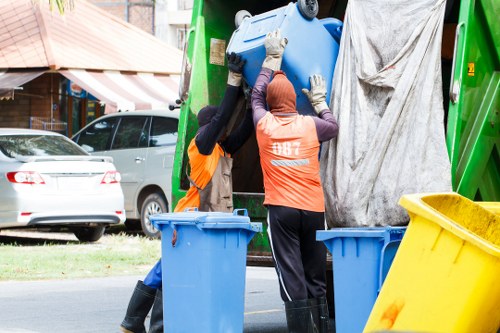 Scope and definitions: This policy applies to full-time, part-time, temporary personnel and third-party contractors engaged in the rubbish removal service area. "Commercial waste" includes non-household materials generated by businesses, institutions and organisations. The statement addresses routine and non-routine operations, including vehicle movements, manual handling, containment servicing, segregated recycling transfers and handling of potentially hazardous loads.
Responsibilities and organisation
Senior management retain overall responsibility for health and safety and will ensure that adequate arrangements are in place. Supervisors will ensure that team members are competent and equipped to perform tasks safely. Employees are required to take reasonable care of their own health and safety and that of others, report unsafe conditions and follow instructions. Contractors must provide evidence of their safety arrangements before commencing work in the waste collection service area.Key duties include:
- Carrying out and recording risk assessments for all activities and revising them as work changes.
- Providing and maintaining suitable Personal Protective Equipment (PPE) and ensuring its correct use.
- Maintaining vehicles and equipment to safe standards with planned inspections and prompt repairs.
- Implementing safe loading, unloading and segregation procedures to prevent contamination and exposure to hazardous materials.
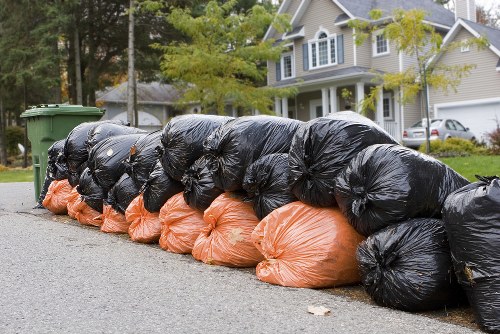 Risk assessment and control measures: All operations will be subject to documented risk assessments. Controls will be selected on a hierarchy of risk reduction: elimination, substitution, engineering controls, administrative controls and PPE. Where hazardous substances are present, we will use appropriate containment, labelling and transfer procedures. Manual handling tasks will be minimised using mechanical aids such as trolleys and tail lifts and staff will receive training in safe handling techniques.
Safe systems, training and competence
Employees and contractors will receive induction training specific to the rubbish company environment and ongoing refresher training relevant to their roles. Training records will be maintained and competency assessments carried out for high-risk activities such as operating vehicles, lifting equipment and handling hazardous waste. Supervisory checks and toolbox talks will support continuous learning and reinforcement of safe behaviours across the commercial waste management workflow.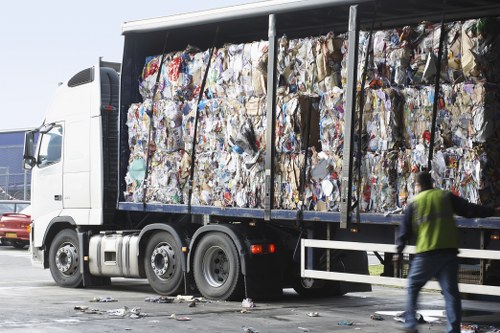 Vehicle and traffic safety: Controls for road and yard operations include route risk assessments, secure loading practices, vehicle checks before each shift, speed limitation within depots and dedicated pedestrian routes. Drivers must comply with vehicle safety checklists, secure loads to prevent shifting during transit and follow incident escalation procedures for collisions, spills or near-misses in the waste collection service area.
 Hazardous materials and segregation: Identification and segregation are fundamental. The rubbish removal service area will implement clear categorisation for hazardous, recyclable and non-hazardous commercial waste. Where hazardous wastes are encountered, staff will follow containment and emergency procedures, including spill kits, isolation of the area and immediate reporting to nominated safety personnel. Waste documentation and manifests must be completed to ensure traceability and safe onward handling.
Incident reporting and emergency response: All incidents, injuries, near-misses and property damage must be reported and recorded. An investigation process will identify root causes and corrective actions to prevent recurrence. Emergency procedures will be maintained for fire, spill response and medical emergencies, with clear roles and nominated first-aiders. Regular drills and review sessions will test and improve response times and procedural effectiveness.
Monitoring, audit and continual improvement: Performance will be monitored using key indicators such as incident rates, audit findings, training completion and equipment inspection records. Internal and external audits will evaluate compliance with this policy and identify opportunities for improvement. Corrective action plans will be implemented with timescales and responsible owners.
Policy review and governance: This Health and Safety Policy is a living document. It will be reviewed annually or following a significant incident, organisational change or regulatory update. Management will ensure legal and regulatory expectations relevant to commercial waste operations and rubbish company service area activities are considered without over-reliance on jurisdictional specifics. Commitment: We commit to maintaining a safe environment for staff, contractors and the public while delivering effective and responsible commercial waste services.
