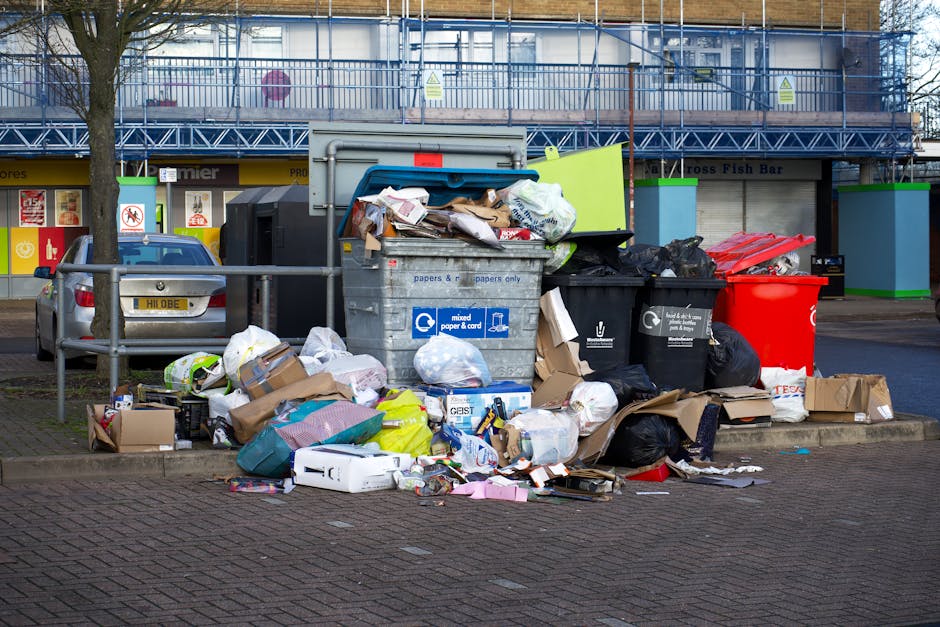
Hidden rubbish removal charges to avoid in New Cross SE14

If you are booking a rubbish clearance in New Cross SE14, the price you see first is not always the price you end up paying. That is the awkward bit, and it catches plenty of people out. Hidden rubbish removal charges can creep in through stair fees, access issues, waiting time, disposal extras, or vague minimum-load rules. The good news? Most of them are avoidable once you know what to ask, what to check, and what should be written down before the team arrives.
This guide breaks down the hidden rubbish removal charges to avoid in New Cross SE14 in plain English. You will see the common fee traps, how reputable waste carriers usually structure pricing, and how to compare quotes without getting lost in small print. If you want a cleaner, calmer booking experience, this is a good place to start.
- Why hidden charges matter
- How rubbish removal pricing works
- Key benefits of understanding charges in advance
- Who needs this advice and when it makes sense
- Step-by-step guidance to avoid extra fees
- Expert tips for getting a fair quote
- Common mistakes to avoid
- Tools, resources and recommendations
- Law, compliance and best practice
- Options and comparison table
- Case study example
- Practical checklist
- Conclusion
- Frequently asked questions
Why Hidden rubbish removal charges to avoid in New Cross SE14 Matters
Hidden fees are frustrating anywhere, but they are especially annoying when you are already trying to clear space quickly. In New Cross SE14, jobs often happen in flats, maisonettes, terraced houses, busy side streets, or homes with awkward stair access. That means the final bill can shift if the provider did not ask the right questions upfront.
Why does this matter so much? Because a cheap-looking quote can become a poor-value job very quickly. A straightforward load might look fine online, then suddenly the invoice includes extra labour, parking complications, congestion-related delays, or special handling for certain items. To be fair, sometimes those extras are legitimate. The issue is when they were never properly explained.
For homeowners, landlords, letting agents, office managers, and tradespeople, the risk is the same: surprise costs make budgeting messy. And once the job starts, you have far less room to negotiate. That is why spotting hidden rubbish removal charges in New Cross SE14 before you book is not just sensible, it is a real money-saver.
Key takeaway: a trustworthy waste removal quote should be specific enough that you can understand what is included, what might be added, and what would trigger a higher price. If it feels vague, it probably is.
How Hidden rubbish removal charges to avoid in New Cross SE14 Works
Most rubbish removal services price by one or more of the following: volume, weight, item type, labour time, vehicle use, and access conditions. The model itself is not the problem. The problem is when important assumptions are left unstated.
In practice, a provider may give a low headline price to win the enquiry, then add charges later if the load is heavier than expected or if the team must carry items down several flights of stairs. That is where customers feel misled, even if the company believes it has simply applied its terms. A better operator will ask practical questions first, then give a more accurate quote from the start.
Here is how the process usually unfolds:
- You describe the waste, often with photos.
- The company estimates volume, item type, and access.
- A quote is issued with assumptions stated clearly.
- The team arrives and confirms the load before starting.
- If something materially changes, the price may change too.
That sounds fair enough, and often it is. But it only stays fair if the company explains the pricing logic in advance. If you are comparing providers, it helps to review pricing and quote guidance before you commit, especially for mixed loads or access-heavy jobs.
In a place like New Cross, where parking, access, and property layout can vary from street to street, even a small difference in how a job is assessed can change the final bill. One job may be a simple ground-floor pickup. Another may involve a tight stairwell, a long carry, and a lot of fragile sorting. Not the same thing at all.
Key Benefits and Practical Advantages
Understanding the charge structure before you book is not just about avoiding bad experiences. It also makes the whole process smoother, faster, and less stressful. There is a kind of relief in knowing the number is real, not a teaser.
- Better budget control: you can plan around a known total instead of bracing for an awkward surprise.
- Faster decision-making: when the quote is clear, you spend less time back and forth on the phone.
- Fewer disputes: a written scope reduces confusion at collection time.
- Cleaner comparisons: you can compare like-for-like instead of just chasing the cheapest line on a page.
- Less stress on the day: nobody wants a tense conversation at the front door while the van is idling outside.
There is also a practical benefit that people sometimes miss: clearer pricing often leads to better service. A company that asks decent questions tends to run a more organised operation overall. That usually shows up in punctuality, communication, and how the crew handles the job.
For some customers, the difference is tiny, maybe a few pounds. For others, especially with bulky items or multi-room clearances, the avoided extras can be meaningful. Either way, it is money staying in your pocket, which is hard to argue with.
Who This Is For and When It Makes Sense
This topic is relevant to almost anyone arranging waste clearance in SE14, but it matters most if your job is not a simple one-item pickup. If the waste is in a flat, on an upper floor, mixed with furniture, or includes awkward materials, the odds of extra charges go up.
You should pay close attention if you are:
- clearing a rented flat before check-out
- preparing a house for sale or renovation
- dealing with builders' rubble or mixed construction waste
- removing old office furniture or archived stock
- disposing of bulky items like mattresses, sofas, or appliances
- emptying a garage, loft, shed, or garden store
- co-ordinating waste removal on a tight timetable
For example, a landlord with a last-minute end-of-tenancy clearance wants certainty more than anything. So does a homeowner juggling a loft clear-out on a rainy Saturday morning. Truth be told, most people do not want a lecture about waste categories. They want a fair price and a crew that turns up when promised.
If your situation is more specialised, you may need a service matched to the load type. For instance, house clearance, flat clearance, or office clearance can be more appropriate than a generic one-size-fits-all quote. And if you are getting rid of awkward furniture, the difference between furniture clearance and furniture disposal may matter depending on how the provider prices transport, labour, and item handling.
Step-by-Step Guidance
Here is a practical way to avoid hidden rubbish removal charges in New Cross SE14 without turning the whole thing into a research project.
1) List exactly what needs removing
Write down the waste by item type. A sofa, two wardrobes, a broken desk, and a pile of mixed bags are not the same as "a bit of rubbish". The clearer you are, the fewer surprises you get later.
2) Be honest about access
Stairs, narrow hallways, basement rooms, locked gates, no lift, long walk from the property to the vehicle, or tricky parking all affect the job. Mention them early. It can feel a bit fussy, but it prevents the classic "oh, that was extra" conversation.
3) Ask what the quote includes
Do not stop at the headline price. Ask if labour, loading time, disposal, recycling, parking, VAT, and congestion-related costs are included. If the answer is vague, keep digging.
4) Check for item-based surcharges
Some items are costlier to handle than general mixed waste. Fridges, mattresses, electricals, plasterboard, paint, and anything hazardous can trigger extra disposal or handling requirements. If these are in the load, mention them. Do not hide them away and hope for the best.
5) Confirm timing and waiting rules
Ask what happens if access is delayed, if you are late, or if the team has to wait. Waiting time is a common hidden charge, especially in busy streets or shared buildings.
6) Get the terms before the job starts
If the provider has standard terms, read them. You do not need to memorise every line, but you should understand how quote changes are handled. If you want to see how a provider frames policies and payment handling, pages like terms and conditions and payment and security can be useful reference points.
7) Take photos if the job is complicated
Photos help everyone. One shot of the load, one of the access route, one of any bulky or unusual items. It only takes a minute and can save a lot of back-and-forth.
That is the basic framework. Simple, really. Not glamorous, but very effective.
Expert Tips for Better Results
Over time, a pattern becomes obvious: the best value rarely comes from the cheapest first quote. It usually comes from the clearest one.
- Ask for a written quote: even a short email is better than a quick phone guess.
- Use photos for mixed loads: they reduce mispricing and help the crew arrive prepared.
- Separate special items: keep fridges, mattresses, and hazardous items distinct from general rubbish where possible.
- Check whether loading is included: some prices sound low because labour is not fully included.
- Compare the assumptions, not just the numbers: two quotes can look similar while covering completely different scopes.
- Ask about recycling and sorting: a responsible operator should be able to explain how materials are handled.
If you are clearing out a mixed space, such as a loft, garage, or garden, ask the provider whether the job is better treated as a dedicated service rather than a general collection. A loft clearance, garage clearance, or garden clearance can be easier to price accurately when the scope is defined well.
One small, useful habit: before collection day, walk the route the crew will use. Open doors, clear the hallway, move parked bins if you are allowed to do so, and make sure the load is easy to reach. It is amazing how much trouble a blocked corridor can cause. A few minutes now, less friction later.
Common Mistakes to Avoid
Most hidden-charge problems start with one of a few avoidable mistakes. Nothing dramatic. Just the sort of things that happen when people are busy.
- Booking only on price: the cheapest headline figure can end up being the most expensive real bill.
- Leaving out awkward items: omitting a fridge, mattress, or chemical container can change the quote on the day.
- Ignoring access details: no lift, long carries, or difficult parking all matter.
- Not checking VAT: sometimes the quote appears lower because tax is not shown clearly.
- Assuming all waste is charged the same: mixed waste, builder's waste, and bulky furniture are often treated differently.
- Forgetting about loading time: a slow sort-out can create a labour charge if it was not covered.
- Not reading the terms: a lot of arguments begin with what someone thought the quote meant.
There is also a subtle mistake people make: they assume a waste carrier should "just deal with it" even when the job involves special handling. In reality, certain materials require different disposal pathways. If you have items that may need specialist treatment, such as chemicals or contaminated materials, review hazardous waste disposal information before booking.
And one more, because it comes up a lot: do not leave all the sorting for collection day unless you are happy to pay for the extra time. It sounds obvious. Still, it happens.
Tools, Resources and Recommendations
You do not need fancy software to avoid hidden rubbish removal charges. A few simple tools do the job well enough.
- Phone photos: take wide shots of the whole pile and close-ups of unusual items.
- Basic room measurements: useful if you are clearing bulky furniture or planning access.
- A short item list: keep it in your notes app so nothing gets forgotten.
- A payment check: confirm how the provider wants to take payment and whether any deposit is required.
- A calendar reminder: helpful if you need to prepare access, parking, or building entry in advance.
For larger or recurring projects, it can help to read broader service pages too. Businesses often look at business waste removal or waste removal when they need a reliable way to manage mixed rubbish, shop waste, or regular clear-outs. If you handle confidential paperwork, confidential shredding is worth considering rather than mixing documents into general waste.
There is also value in reviewing the provider's sustainability approach. A company that explains recycling routes and sorting processes clearly is usually thinking about the job more carefully. You can read more about that through recycling and sustainability. It will not magically lower every price, but it does tell you something about standards.
Law, Compliance, Standards, or Best Practice
When waste is being removed, there is more to think about than just price. In the UK, waste handling is tied to legal responsibility, safety, and proper disposal. You do not need to become a compliance expert, but you should be wary of any operator who seems casual about where waste goes.
As a customer, the safest approach is to use a properly insured, traceable service with clear terms. Good practice usually includes:
- clear identification of what is being collected
- safe lifting and loading methods
- appropriate handling for hazardous or restricted materials
- proper disposal and recycling routes
- transparent payment and invoice terms
If you are comparing providers, it is sensible to look for signs that they take safety seriously. Pages such as insurance and safety and health and safety policy can help you judge whether the company is operating with the right mindset. For regulated or awkward items, that matters a lot. A cheap skip in the wrong place, or a careless pickup with no proper handling, can create more trouble than it solves.
There is also a practical expectation around waste segregation. Some loads can be reused, recycled, or broken down more efficiently if they are not dumped together in one mixed pile. That is one reason good communication at booking stage matters. It is not just about avoiding charge surprises; it is also about making the collection safe and compliant from the start.
Options, Methods, or Comparison Table
Different rubbish removal options suit different jobs. If you choose the wrong method, you may end up paying for time, access, or capacity you did not actually need.
| Method | Best for | Common charge risk | Watch out for |
|---|---|---|---|
| Man-and-van style rubbish removal | Small to medium mixed loads, fast collections, bulky household items | Labour, waiting time, access fees | Stairs, parking, and "minimum load" rules |
| Dedicated furniture removal | Sofas, wardrobes, tables, single bulky items | Item surcharges, disassembly fees | Oversized pieces that need extra carrying |
| Room-by-room clearance | Flats, houses, lofts, garages, and larger clear-outs | Sorting time, large-load adjustments | Hidden waste in cupboards, sheds, and storage spaces |
| Specialist item disposal | Fridges, appliances, mattresses, hazardous waste | Special handling and disposal costs | Items that cannot go in standard mixed rubbish |
If you are unsure which route fits your job, compare the load against what each service is built for. For example, mattress and sofa disposal is often more appropriate for one or two large household items, while fridge and appliance removal makes sense when white goods need separate handling. It is a bit boring to compare, but it saves real money.
Case Study or Real-World Example
Picture a typical New Cross SE14 flat clear-out. One bedroom, second floor, no lift. The job includes a broken bed frame, a mattress, a small desk, a couple of bags, and a fridge in the kitchen. On the surface, it sounds straightforward. In reality, it has four different pricing triggers.
A rushed quote might ignore the fridge, assume ground-floor access, and leave labour open-ended. That is exactly how hidden charges appear later. The final price may jump because the crew had to carry everything downstairs, pause for parking, and handle the appliance separately.
Now compare that with a better booking process. The customer sends photos, mentions the second-floor access, confirms the fridge, and lists the items honestly. The provider gives a more accurate quote, explains what is included, and states what would count as a change. Collection day is calm. No one is standing in the hall with a surprised expression. Much nicer, frankly.
This is why preparation matters more than people expect. A few honest details at the start can make the difference between a smooth pickup and a grumpy invoice later on.
Practical Checklist
Use this checklist before you confirm any rubbish removal booking in New Cross SE14.
- Have I listed every item?
- Have I mentioned stairs, lifts, parking, gates, and long carries?
- Do I know whether labour is included?
- Have I checked for extra fees on fridges, mattresses, appliances, or hazardous items?
- Is the quote written down clearly?
- Do I know whether VAT is included?
- Have I read the key terms for price changes, waiting time, or failed access?
- Have I asked how the waste will be sorted, recycled, or disposed of?
- Do I know who to contact if the job scope changes?
- Have I prepared the area so the crew can load quickly?
If you can answer yes to most of those, you are in much better shape. It is not glamorous, but it is the difference between a tidy booking and a messy one. And nobody wants the messy one.
Conclusion
Hidden rubbish removal charges to avoid in New Cross SE14 are usually not complicated once you know what to look for. The main trick is to slow the process down just enough to ask the right questions: what is included, what counts as extra, how access affects pricing, and whether any special items need different handling.
That small amount of care upfront can save money, reduce stress, and make the collection day feel ordinary in the best possible way. No drama. No awkward invoice surprises. Just a clear job done properly.
If you are comparing services, take a minute to review the provider's pricing and quotes, along with the relevant service pages for your load type. A sensible quote is worth more than a flashy one.
Get a free quote today and see how much you can save.
In the end, a fair rubbish removal service should leave you with more space, less stress, and the pleasant feeling that you handled it properly first time.
Frequently Asked Questions
What are the most common hidden rubbish removal charges?
The most common extras are labour fees, waiting time, access charges, stair carrying, parking complications, and special disposal costs for items like fridges, mattresses, or hazardous waste.
How can I tell if a rubbish removal quote is genuine?
A genuine quote usually explains what is included, what assumptions were made, and what would cause the price to change. If it is only one very low number with no detail, be cautious.
Do stairs always cost extra for rubbish removal in New Cross SE14?
Not always, but stairs often affect labour time and therefore price. It depends on the provider's pricing model and how clearly access was described when the quote was given.
Are mattress and sofa disposal jobs priced differently?
Often yes. Bulky furniture can require more labour, more space in the vehicle, or different handling. Checking the specific service for mattress and sofa disposal helps set expectations.
Will I pay more if the crew has to wait outside?
Possibly. Waiting time is a common extra if the job cannot start when planned. This is why access, keys, and parking arrangements should be sorted before the team arrives.
What should I do if I have a fridge or appliance to remove?
Tell the provider in advance. Fridges and appliances often need separate handling, so it is better to book through a relevant option such as fridge and appliance removal rather than hiding them inside a mixed-load description.
Can hidden charges appear after the crew has already arrived?
Yes, if the actual job differs from what was described. That is why photos, honest item lists, and clear access details are so important.
Is recycling usually included in the price?
Often it is, but not always in the same way. Some providers include recycling and sorting within the base price, while others build it into item or load costs. Ask how the waste will be handled.
What if I am clearing a flat with difficult access?
Say so early. Flat clearance jobs can involve stairs, lifts, entry systems, or long walks from the road. A service such as flat clearance is often more suitable than a vague general quote.
How do I avoid paying more for builder's waste?
Be specific about the material type. Heavy rubble, mixed builder's waste, plasterboard, and timber may be priced differently. If your job is renovation-related, check the details for builders waste clearance.
Should I choose the cheapest quote?
Not by default. The cheapest quote can be the most expensive once extras are added. Compare what is included, how the provider communicates, and whether the terms are clear.
What is the safest way to compare rubbish removal companies?
Compare written quotes, item lists, access assumptions, payment terms, and the provider's approach to safety and disposal. A little due diligence goes a long way.
Some jobs are simple. Others need a bit more thought. But once you know where the fee traps live, you can avoid most of the unpleasant surprises and get the job done with far less fuss.